عدد المشاريع : 50 مشروع
مبلغ المنحة : 500000 دولار
عدد المستفيدين : 500000 مستفيد
عدد المشاريع : 50 مشروع
مبلغ المنحة : 500000 دولار
عدد المستفيدين : 500000 مستفيد
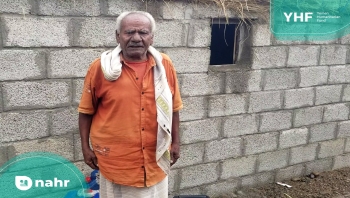
At seventy-nine years old, Hassan Al-Wassabi, a displaced person from Al-Jarahi district and a father supporting a family of ten, recounts a painful chapter of his life that began with the outbreak of war. He says, "I owned a home, I worked, and lived in peace with my family. Suddenly, fires erupted, and we were forced to flee in search of safety."
Their displacement journey led them to the Al-Jallah area, the closest safe place at the time, where a new ordeal began with a fragile shelter that offered no protection from summer heat or winter cold.
Initially, the family received a relief tent, and they were overjoyed. However, the tent quickly became a source of danger and suffering. It was torn apart by wind, sun, and rain; its wooden poles were eaten away by termites. It had no door or bathroom, and no privacy. With every rain, the children would move around inside the tent to escape the water and would fall ill, while supplies and food were flooded. Hassan says, "We were living a real, unbearable tragedy."
Asia Jamean, one of the beneficiaries, shares even harsher details: "When it rained, the family was forced to bring the livestock into the tent, so animal waste would mix with food and rainwater. The firewood was wet, so there was no cooking, no lighting, and the children went to sleep hungry. The absence of latrines and clean water, and the spread of smells and insects, made the camp a fertile environment for diseases like cholera. Fear and insecurity increased, especially at night."
With the intervention of the National Foundation for Development and Humanitarian Response (NAHR), the trajectory of suffering changed. The foundation conducted an emergency assessment of shelter needs and climatic conditions and held consultative sessions with the community to determine the most suitable solution. The results showed that 95% of the dwellings were uninhabitable and completely damaged by the 2024 floods.
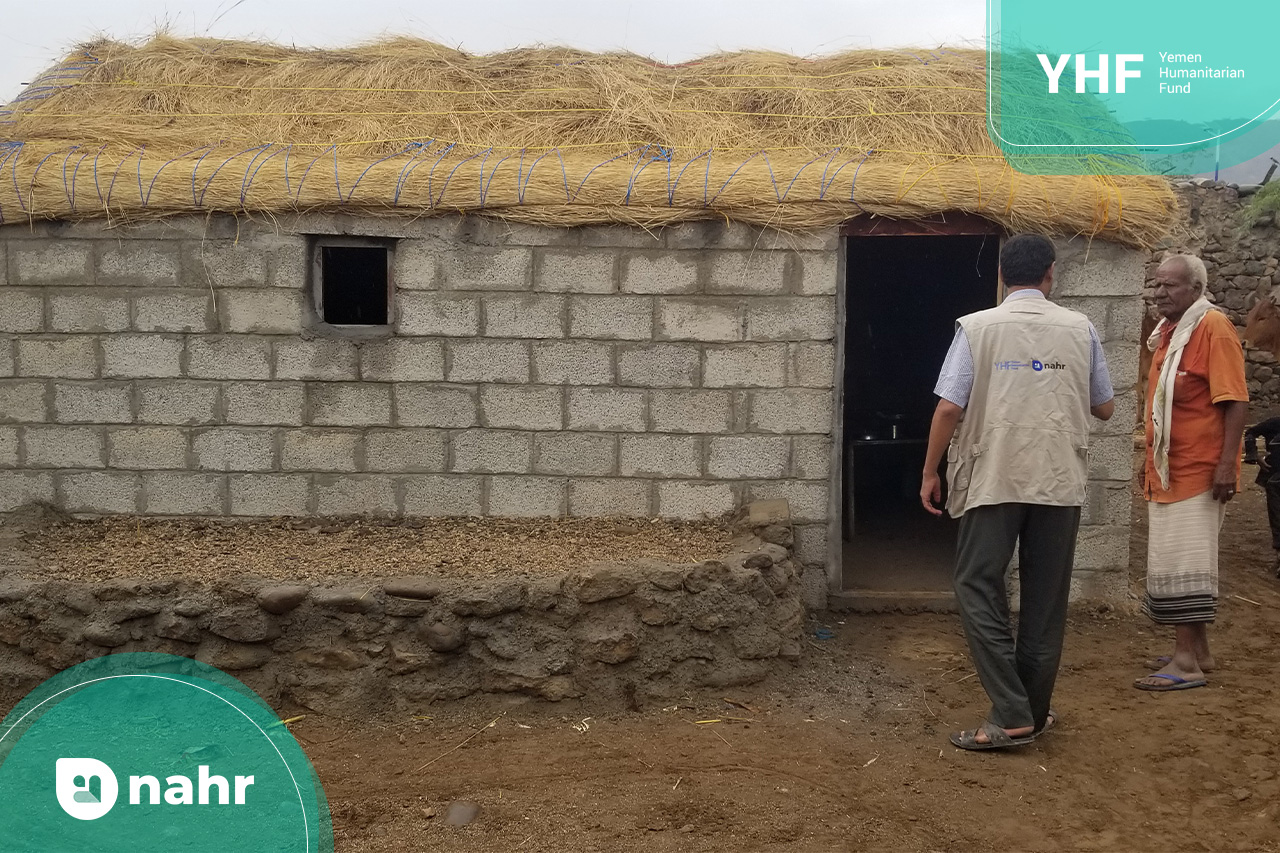
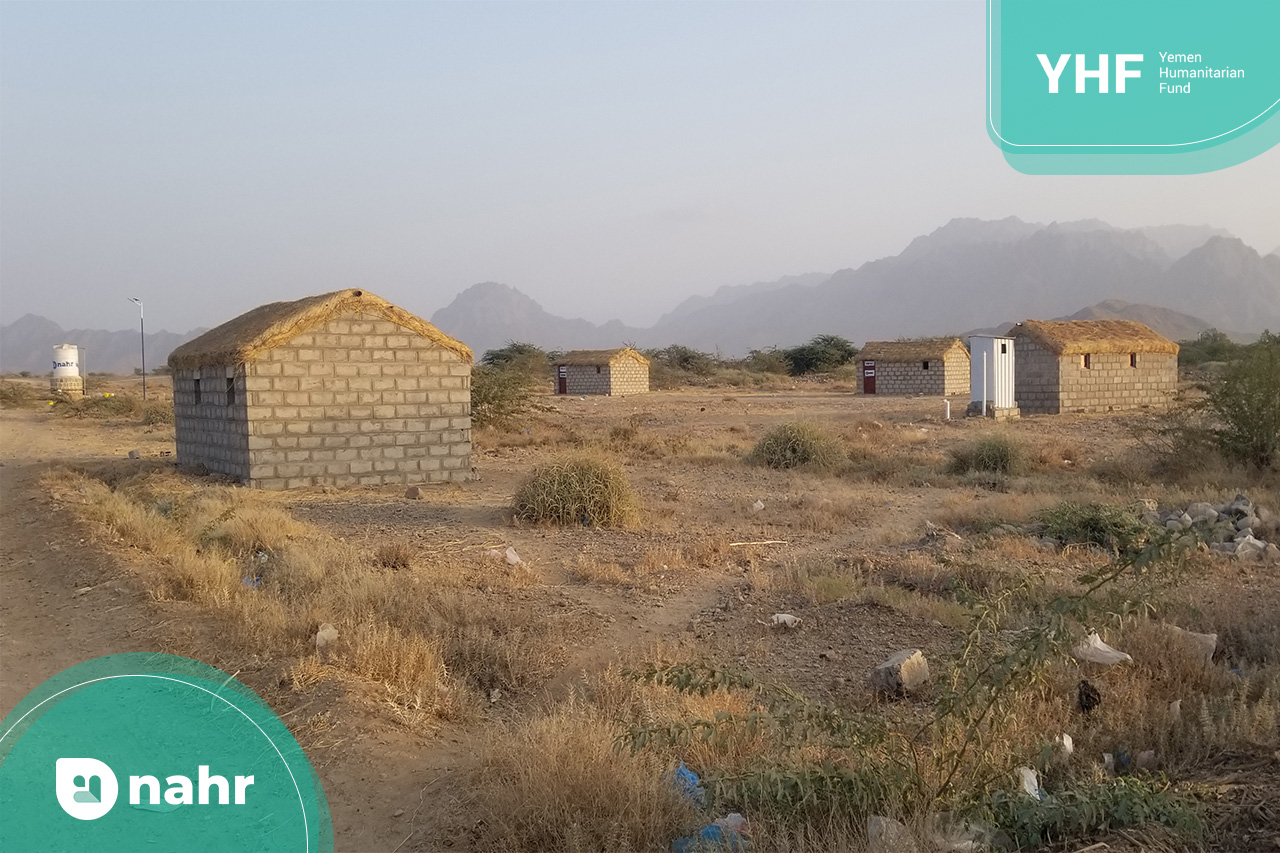
Accordingly, the foundation decided to transition from emergency tents to safer transitional shelters. 169 block-built shelters were constructed according to the highest standards of quality and safety, benefiting 1,067 people. They featured ventilation windows, doors, adjacent bathrooms, lighting, and clean water. Multi-purpose cash assistance and protection support were also provided to 170 families (1,329 individuals). Furthermore, the Al-Jallah water source was rehabilitated, safe latrines were provided, water purification filters and hygiene kits were distributed, and health awareness sessions were implemented.
The fruits of these efforts are evident in a completely different scene. 100% of families now have safe shelters and access to sufficient clean water, which has significantly reduced health and security risks. The displaced have regained part of their dignity and sense of security.
Hassan Al-Wassabi concludes, "No matter what we say, we cannot express our happiness after having lost hope. Safety has returned to us thanks to this assistance. All thanks to the foundation and the supporting entity."
Thus, the integration of services transformed the families' suffering into real success and a sustainable humanitarian impact.

Success Stories
 |
"Ibrahim''s Success Story | When Aid Becomes a New Beginning ✨" |
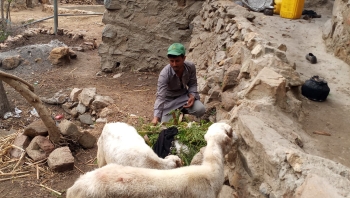 |
Majed''''s Success Story | A Small Step… A Great Impact ? |
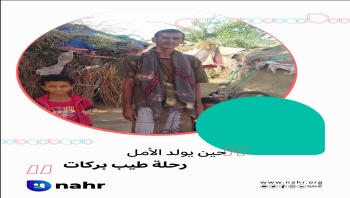 |
Tayeb Barakat… From Fear for Daily Bread to the Restoration of Hope |
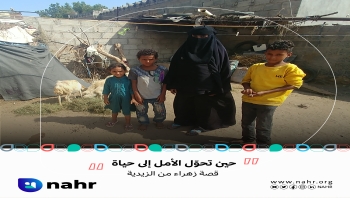 |
When Hope Turns into Life... The Story of Zahra from Al-Zaydiyah |
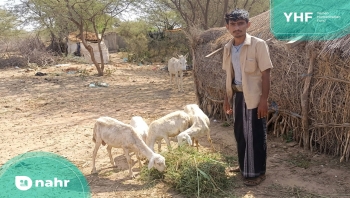 |
From the suffering of displacement to building a sustainable source of income |
 |
When Shelter Becomes Dignity and Safety |
 |
Success Story: When Water Returned... Life Returned |
 |
Success Story – Al-Khalil Camp: From Hardship to a More Dignified Life |
 |
When Cash Assistance Transformed into a New Life |
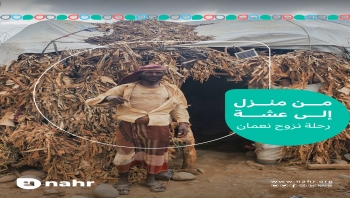 |
From a Home to a Shack: The Displacement Journey of Noman |