
.
Success Story: When Water Returned... Life Returned
NAHRThursday, 01 January, 1970
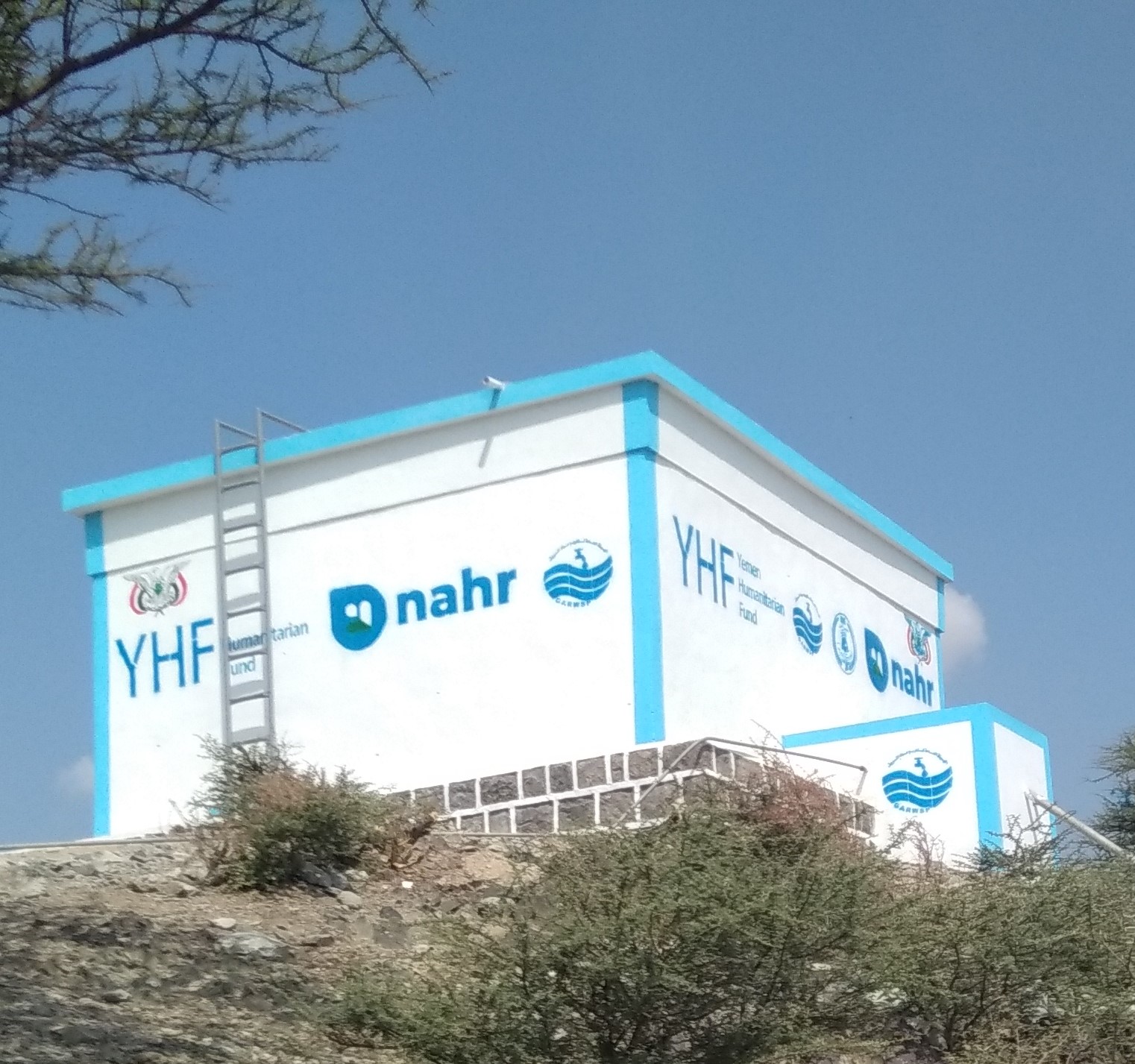
Deep in the Wusab As Safil District, where the Al Mashrafah camp stretches over hills weary from displacement, life clung to the remnants of hope. More than 237 families who had fled conflict in Hodeidah and Taiz arrived, believing the camp would be a haven of safety... But water, the most basic necessity of life, was the most profound absence.
When the camp was established, smiles spread as a new water network arrived. But the joy lasted no more than a week; the water suddenly cut off, turning the dream into bitter disappointment. Suffering flowed swiftly: children being mistreated at farmers' wells, women carrying heavy water buckets across a polluted valley, and exhausted bodies paying the price for every drop. Cholera and diarrhea spread alarmingly, affecting up to 45% of the population.
Amid this bleak scene, Fatima Al-Bar'ai, a 32-year-old young widow, lived a pain beyond endurance. She lost her husband, her mother, and her child all within a single week due to cholera from contaminated water. She would travel long distances to fill just one jerrycan from the valley, causing her spinal health problems.
Fatima says:
"We didn't know water could be deadly... It took the people dearest to me, and it took my health and my dignity."
But her life changed when the project "Provision of Food and Lifesaving Emergency Livelihoods in Aslam District, Hajjah Governorate, and Integrated WASH, Shelter, and Protection Response in Wusab As Safil District, Dhamar Governorate, funded by the Yemen Humanitarian Fund (YHF)" arrived. Clean water began reaching her tent within minutes. She received a hygiene kit, a water filter, cash support, and psychological aid that restored her balance.
Fatima says:
"They gave me back hope... and that is priceless."
Fatima's suffering was just a small part of a larger story. In Moshra' Al Qaraqarah village, Abduh Ibrahim was pulling his children out of school to spend hours fetching water from a distant well, often in vain. Childhood and education were lost, replaced by illiteracy and disease.
In Al Jallah camp, Asia Jum'an struggled for her most basic right: privacy. She would go to neighbors' latrines during the day and undertake a terrifying nightly journey to a far-off stream, amidst snakes and scorpions. Her tattered tent provided no shelter from heat or cold, and rain would seep in, wiping out what little provisions remained for her children.
As for Abdulrahman Falfal, a community volunteer, he witnessed the situation firsthand:
"Animal waste everywhere, contaminated water, diseases spreading, and no one knew how to protect themselves."
But with awareness sessions that lasted five months, behaviors and practices began to change, and weekly cleanliness campaigns started to restore a sense of health to the place.
Then came the major transformation...
The National Association for Humanitarian Response and Development (NAHR) responded to the emergency. They rehabilitated three water systems serving the camps and surrounding communities, provided families with filters and hygiene kits, built 30 safe latrines, delivered awareness sessions that changed community behavior, and trained local cadres to ensure sustainability.
The project created a clear shift in the lives of Wusab As Safil camp residents. The rehabilitation of three water systems enabled 9,363 people to access safe water within minutes, where before they traveled long distances. Per capita water consumption increased from 5 to 15.4 liters per day thanks to the availability of clean water and the distribution of 700 filters. Meanwhile, awareness sessions helped promote hygiene practices and launched regular community campaigns. Furthermore, building 30 latrines and distributing 700 hygiene kits provided a safer, more dignified sanitary environment for families. As a result of these integrated efforts, diarrhea cases dropped from 38% to 3%.
Water returned... so health returned. Dignity returned. And hope returned.
Thus, in a camp once suffocating from thirst, a success story was born—proving that a single project can change the fate of thousands, and that a drop of water can carry with it an entire life.